Role Clarity: Why It Matters for Executive Assistants in Schools
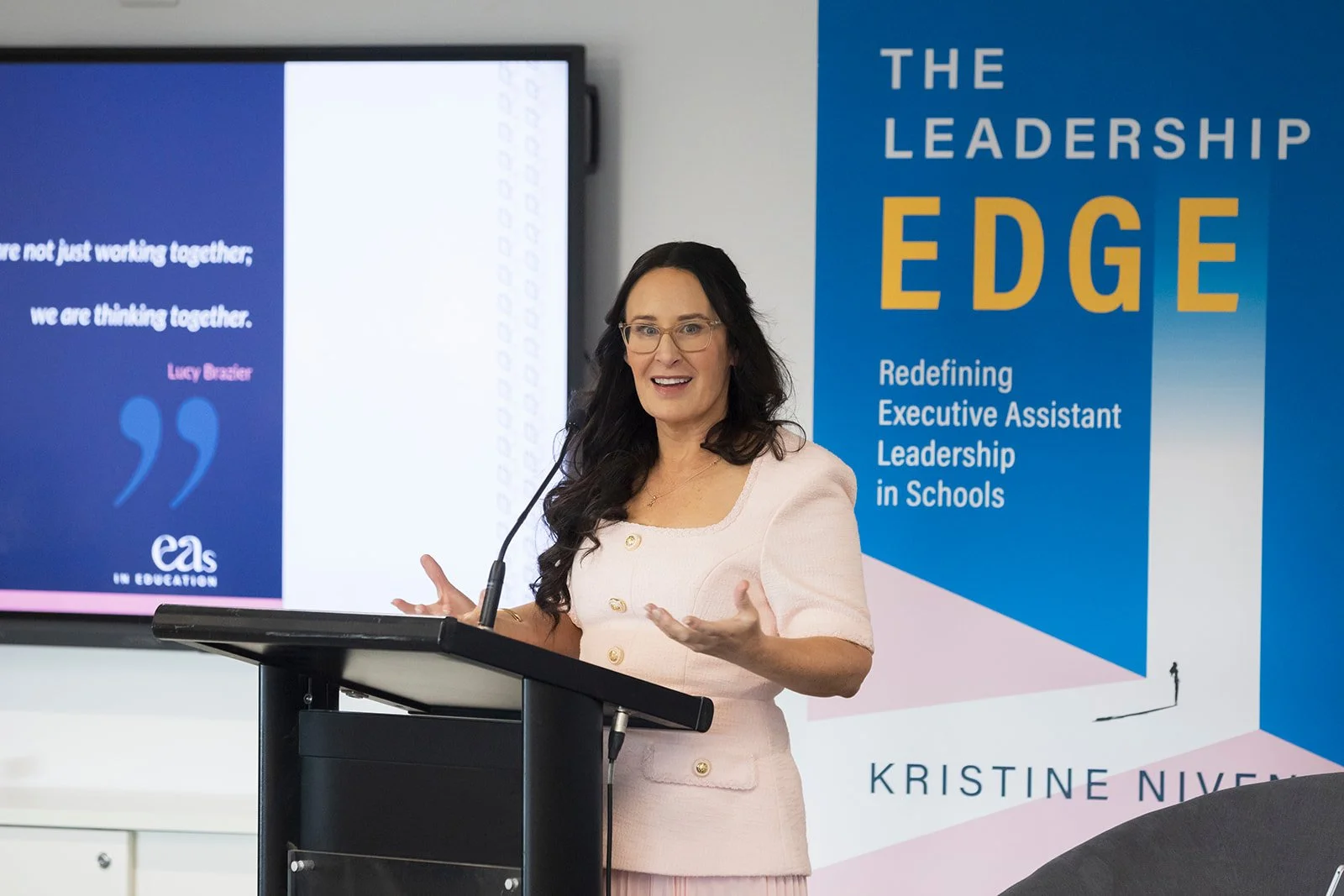
The National Gathering - Radford College, ACT
As Founder of EAs in Education, through my experience leading a national professional community, my work as an Executive Assistant to Senior Executives, and my review of the literature, I have observed that many Executive Assistants working within schools experience a lack of role clarity. Their roles are often ambiguously defined, inconsistently understood, or poorly communicated, creating uncertainty around expectations, responsibilities, and scope.
We know leadership is not defined by a title. Many people demonstrate leadership every day without holding a formal leadership position. Executive Assistants in education are passionate about their work because they understand the difference they make. They are driven by a desire to contribute to their school communities and support environments dedicated to growth, learning, and student success.
However, when role expectations are unclear, uncertainty can emerge around authority, responsibilities, decision-making, and scope. This affects not only the Executive Assistant, but also the Senior Executive they support and the broader school community. We know the significant impact and benefits that flow to a school community from a strong Executive Assistant–Senior Executive partnership.
Role clarity is not about limiting the work of an Executive Assistant. Rather, it provides a foundation from which EAs can better understand their role, articulate their value, and step confidently into their leadership capacity.
Why Does Role Clarity Matter?
Have you ever started in a school where colleagues seemed unsure about what your role actually involved?
At the recent National Gathering, Dr Briony Scott in her keynote posed a thought-provoking question:
"If you asked the person in the next office what an Executive Assistant actually does, would they be able to answer clearly?"
For most of us at The Gathering, and I suspect for many schools, the answer is probably no.
This lack of understanding can create challenges in two key ways:
It can lead to confusion, complexity, and tension within workplace relationships when colleagues do not fully understand the purpose, responsibilities, scope, or authority of the Executive Assistant role.
It can make it difficult for Executive Assistants to recognise, articulate, and measure their contribution, limiting their ability to demonstrate the value and impact they bring to their school communities.
Dr Scott also challenged us to reflect on the best Executive Assistant we had ever encountered and consider what made them exceptional. Rarely is it their ability to manage a diary or coordinate a meeting. More often, it is their judgement, influence, relationships, foresight, leadership, and ability to create capacity for others that make the difference.
The Complexity of the Role
Part of the challenge in achieving role clarity lies in the diversity of Executive Assistant roles within schools. Schools are also becoming increasingly complex organisations, requiring Executive Assistants to navigate a broad range of responsibilities, relationships, and competing priorities. As a result, the role can look very different from one school to another, and even between Executive Assistants within the same organisation.
Executive Assistant roles within schools are particularly diverse, with responsibilities varying significantly depending on the Senior Executive being supported and the context of the school. An EA may support a Principal, Campus Principal, Vice Principal, Business Manager, Head of Junior School, Head of Middle School, Head of Senior School, or another member of the leadership team.
As a result, the scope, authority, and expectations of the role can differ considerably from one school to another.
Some Executive Assistant roles involve leading teams, managing projects, overseeing budgets, coordinating operational functions, or contributing to strategic initiatives. Others focus more heavily on executive support, stakeholder engagement, relationship management, and facilitating the effectiveness of the Senior Executive. Many encompass a combination of these responsibilities.
For many Executive Assistants in education, the diversity of the role is one of its greatest attractions. However, it can also contribute to confusion when role descriptions are overly broad or fail to clearly articulate responsibilities, decision-making authority, and strategic contributions.
While no two Executive Assistant roles are exactly the same, clarity around the purpose and contribution of the role is essential for both the Executive Assistant, the Senior Executive and the school community they serve.
Moving Forward
I believe that a well-designed position description, combined with strong communication to colleagues and support from senior leadership, helps make the contributions of Executive Assistants visible. It provides clarity for the Executive Assistant, the Senior Executive, and the broader school community. Most importantly, it communicates the purpose of the role, establishes clear expectations, and creates a shared understanding of the value, influence, and contribution the Executive Assistant brings to the school.
When schools clearly define and communicate the Executive Assistant role, they do more than support effective administration. They create the conditions for EAs to contribute strategically, build stronger partnerships with senior leaders, and exercise leadership in ways that benefit the entire school community.
As I continue my Graduate Certificate of Education Research, exploring how Executive Assistants understand their role identity, organisational value, and leadership capacity within independent schools, I am becoming increasingly convinced that role clarity matters.
Reflecting on my own experiences and the stories shared by Executive Assistants across the EAs in Education community, I have become increasingly convinced that role clarity matters for three key reasons.
Role clarity helps Executive Assistants understand and articulate their value.
Role clarity strengthens the Executive Assistant–Senior Executive partnership, creating greater alignment, trust, and effectiveness that benefits the entire school community.
Role clarity enables schools to better recognise and leverage the leadership, influence, and contribution of Executive Assistants.
So, I'll leave you with the same question posed by Dr Briony Scott:
If you asked the person in the next office what an Executive Assistant actually does, would they be able to answer clearly?
If not, perhaps there is an opportunity for schools to think more deeply about how the Executive Assistant role is understood, communicated, and supported - ultimately benefiting the entire school community through improved organisational capacity and the achievement of strategic goals.