Why Does Your Role Exist?
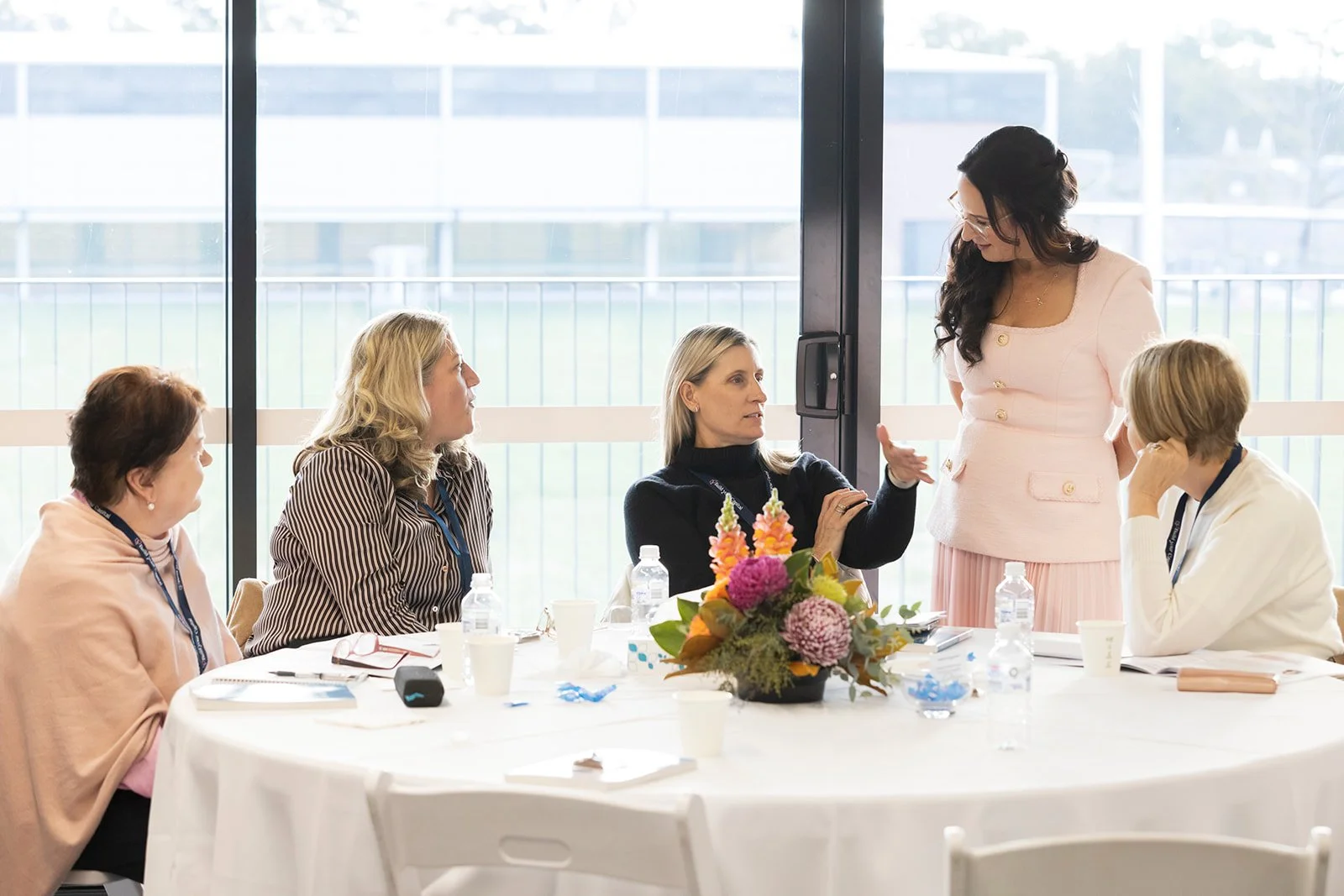
The Gathering 2026 - Radford College, ACT
One of the things that delighted me most when I joined Beaconhills College was discovering that the College Services team has its own mission statement proudly displayed on the wall at both campuses.
It speaks of creating a positive experience and service, collaborating to achieve common goals for the College, embracing change, valuing one another's strengths, and rising together to every challenge.
As someone who has spent considerable time reflecting on purpose, I found myself smiling. This was more than words on a wall. It was a clear expression of why our team exists.
What I particularly love is that the mission statement doesn't simply sit on the wall. It frames our team meetings, guiding our conversations and reminding us of the purpose that unites us. It provides a shared lens through which we make decisions, reflect on our work, and consider how we can best contribute to the College. It continually reminds us that our work contributes to something much bigger than the tasks we complete each day.
Discovering a mission statement that so clearly articulated the purpose of our team prompted me to reflect more deeply on purpose. It is a concept I have spent considerable time thinking about over recent years, and I have come to believe that understanding why we do what we do changes not only the way we see our work, but also the way we influence the people and communities around us.
Professor Phil Cummins, in The Leadership Edge, describes leadership as an act of stewardship rather than authority. He suggests that our purpose is realised not through tasks or technical expertise alone, but through the way we serve alongside others with curiosity, compassion, courage, and a commitment to fostering belonging, enabling potential, and strengthening community.
Several years ago, Professor Cummins also encouraged us to connect with the why of our schools and, in turn, our own purpose within those communities. While the core business of every school is teaching and student learning, those of us working in administration and support roles are not separate from that mission. At times, it can feel as though our work sits at the edges of school life, yet in reality we are essential contributors to its success. Through our daily actions, decisions, and interactions, we help shape culture, build trust, and create environments where people feel they belong.
Working in education is not simply about achieving immediate results. It is about planting seeds that may take years, even decades, to flourish. We influence lives in ways we may never fully witness. Every act of kindness, every thoughtful conversation, every decision, and every interaction has the potential to shape someone else's future.
The actor Ricky Gervais captures this sentiment beautifully in the series After Life:
"A society grows great when old men plant trees whose shade they know they shall never sit in. Good people do things for other people."
Whether those words originated with him or not, the sentiment is timeless. The shade may never be ours to enjoy, but it will provide comfort, opportunity, and inspiration for future generations.
For administration professionals working in schools, this idea resonates deeply. Much of our work happens quietly behind the scenes, yet its impact reaches every corner of the school. By supporting leadership, strengthening relationships, shaping culture, and ensuring the organisation functions effectively, we contribute to a purpose far greater than ourselves. Ours is a role of service and stewardship, creating the conditions that enable others to flourish. Purpose is not found in the tasks we perform; it is found in the difference those tasks make.
In a previous article, I explored the importance of role clarity and the need for Executive Assistants to have a clear understanding of the purpose, responsibilities, scope, and contribution of their role. As I continued reflecting, I realised that role clarity answers only part of the question.
Role clarity helps us understand what our role is.
Purpose helps us understand why it exists.
When we understand both, our work becomes more intentional. We make decisions with greater confidence, build relationships more purposefully, and approach even the routine aspects of our role with a clearer sense of contribution. Purpose gives meaning to role clarity, while role clarity provides direction for our purpose. Together, they enable us to move beyond simply completing tasks towards making a meaningful contribution to our school communities.
This understanding of purpose is not unique to my own experience. In 2024, I undertook research with members of the EAs in Education network to better understand the motivations, aspirations, and experiences of Executive Assistants working in schools. What emerged was both affirming and inspiring.
Executive Assistants consistently described being motivated by the opportunity to contribute to something meaningful. They spoke about supporting leaders, strengthening school communities, fostering belonging, and making a positive difference in the lives of students and colleagues. While participants acknowledged the challenges of the role, purpose consistently outweighed prestige or profit. They found deep fulfilment in working within school communities whose mission extends beyond organisational success to the growth and wellbeing of young people.
Perhaps the most significant insight from the research was that Executive Assistants are purpose-driven professionals. They are not motivated solely by the tasks they perform but by the difference those tasks make. They understand that by enabling leaders, strengthening relationships, supporting colleagues, and contributing to a positive culture, they help create the conditions in which leaders, staff, students, and ultimately school communities can thrive.
So how do we understand our own purpose?
Simon Sinek challenges us to begin with why. Our why is not simply what we do; it is the reason we do it. It shapes our decisions, influences our behaviour, and gives meaning to our work.
I often return to the analogy of the cathedral builder. One person may believe they are laying bricks, while another understands they are helping build a cathedral. The work itself is identical, but purpose transforms the way it is experienced. When we understand why our role exists, even the ordinary tasks become part of something extraordinary.
Today, my purpose is clear. Like many aspects of leadership, however, it has continued to evolve since I began my new role.
To be a strategic business partner who understands the school deeply and, in collaboration with others, supports my Senior Executive to achieve the school's operational and strateigc goals. Every decision I make, every relationship I build, and every challenge I navigate is ultimately in service of that purpose. More recently, as I have taken on responsibility for leading a team, my purpose has expanded. I now have the privilege of supporting, empowering, and mentoring others to become the best versions of themselves so that, together, we can contribute to the goals of the College and the success of our school community.
Purpose evolves as our responsibilities evolve.
Looking back, I realise that finding the College Services mission statement wasn't simply a pleasant surprise. It was an affirmation that purpose should not remain an abstract idea hidden in strategic plans. It should be visible. It should be present in the culture. It should shape conversations. It should guide decisions. It should frame the way teams work together.
Every school has a vision and a mission. Every team contributes to that mission in its own unique way.
So perhaps the question each of us should take time to consider is this:
Why does my role exist?
When we can answer that question with clarity, our work becomes more than a collection of tasks. It becomes a vocation. We recognise that we are not simply supporting the day-to-day operation of a school - we are contributing to a community, enabling leadership, nurturing belonging, and helping create an environment where young people can flourish.
That, to me, is the true privilege of working in education.